
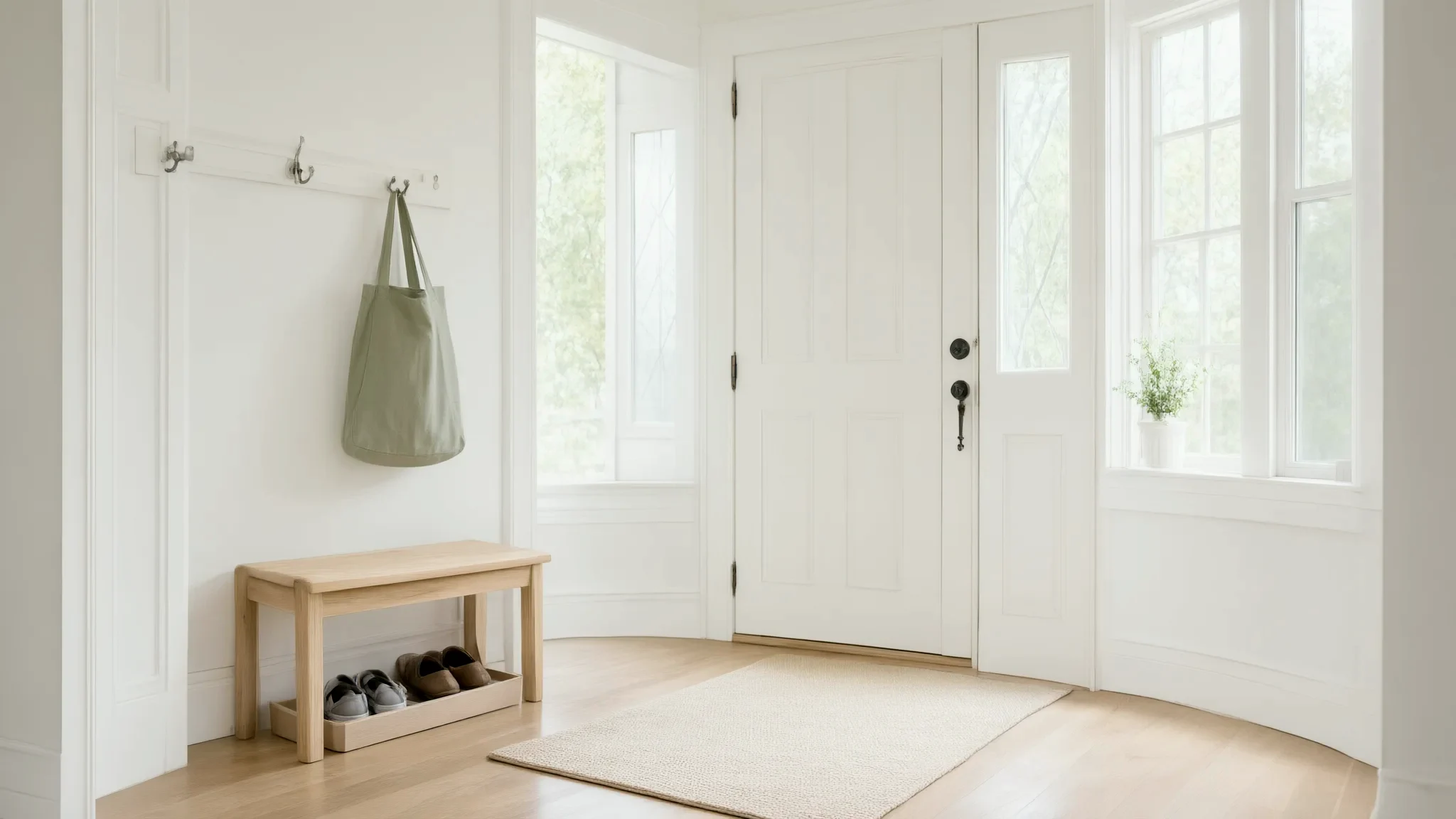
The entryway floor is clean, someone comes home, and there is a fresh trail from the door to the kitchen. In a Fair Haven home where shoes, bags, and jackets all land in one small space, the problem is often the route through the room. Cleaning the same trail again will not change where tomorrow’s shoes go.
Start at the door you actually use. The formal front entrance may stay tidy while everyone comes through a side door with a full bag in each hand. That everyday entrance is where a small change can save repeated cleaning across the rest of the house.
Give shoes a place before the floor gets dirty
Set a shoe tray or another easy-to-clean landing spot close enough to use without walking across the room. It should sit clear of the door swing and the walking path. If reaching it means stepping around a bench or a pile of bags, it is probably in the wrong place.
Choose a mat that lies flat and suits the floor beneath it. Check the floor manufacturer's advice about rubber or other backing materials. A mat that slides or curls at the edge creates a new problem. Keep the arrangement simple enough that someone arriving with groceries can use it.
Remove loose dirt before adding water
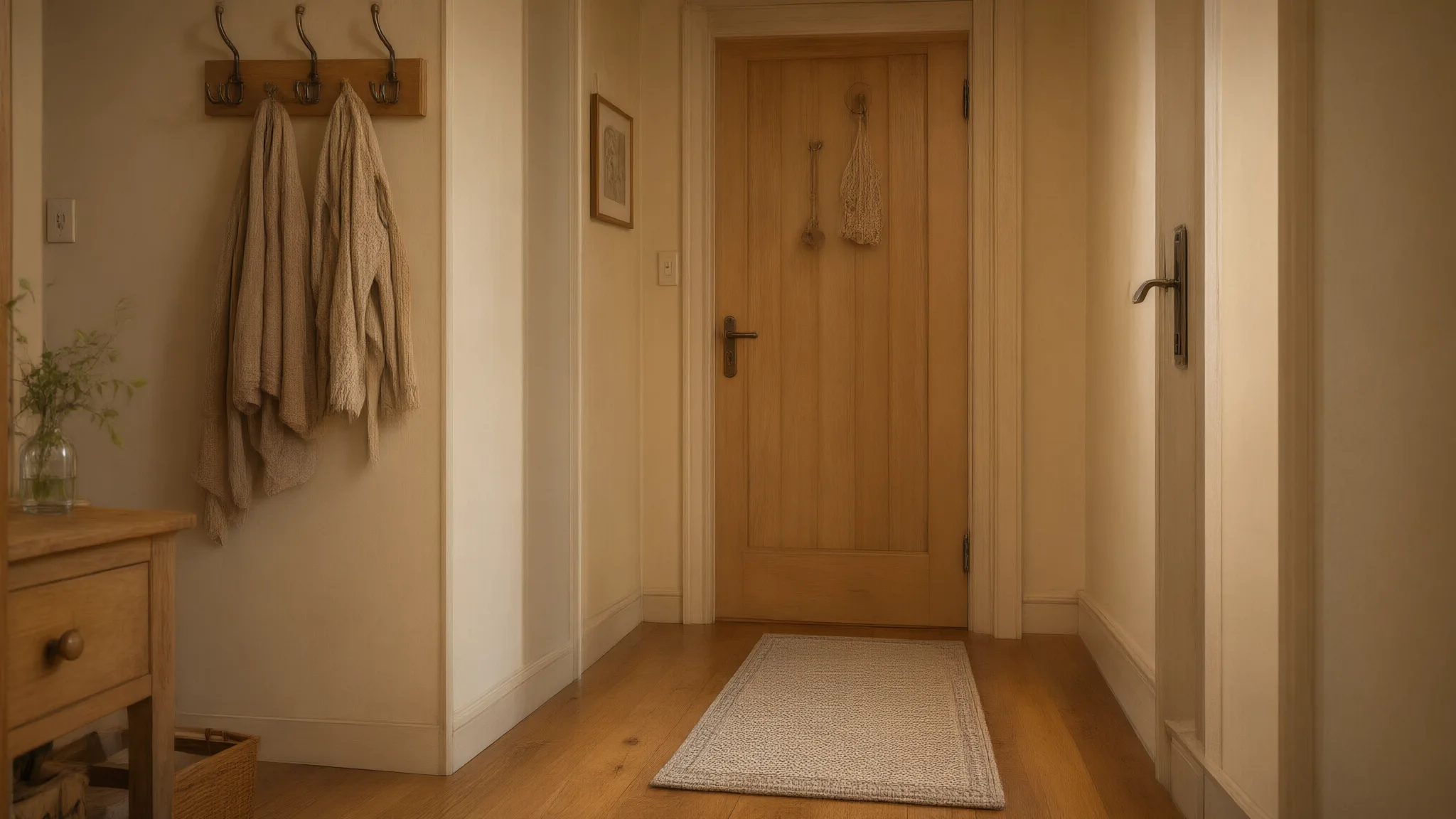
Pick up shoes and shake out or vacuum the mat according to its care instructions. Collect loose grit from the floor before mopping. Pushing a wet mop through crumbs, leaf fragments, and grit tends to spread the mess around instead of lifting it away.
Use a vacuum attachment or soft tool suited to the flooring at the baseboard edge. Check behind the open door and around the shoe tray. Those are easy places to miss when you clean only the strip that is visible from the hallway.
For ordinary support beyond the entrance, see house cleaning in Fair Haven. A useful request explains which entrance gets the most traffic and whether dirt is reaching other rooms.
Start at the door you actually use.
Keep wet cleanup gentle
Once the grit is gone, follow the floor’s cleaning instructions for the remaining marks. Use the amount of moisture the surface allows. Do not leave a wet mat or puddled water sitting against wood trim. Dry the area as directed before putting the mat and shoes back.
Salt, dark marks, or a cloudy finish can need different treatment depending on the material. Identify the surface before trying a stronger cleaner. Avoid assuming a method that worked on bathroom tile will also work on a wood hallway. If the mark may be damage, more scrubbing is not necessarily the answer.
Check what the bags are doing
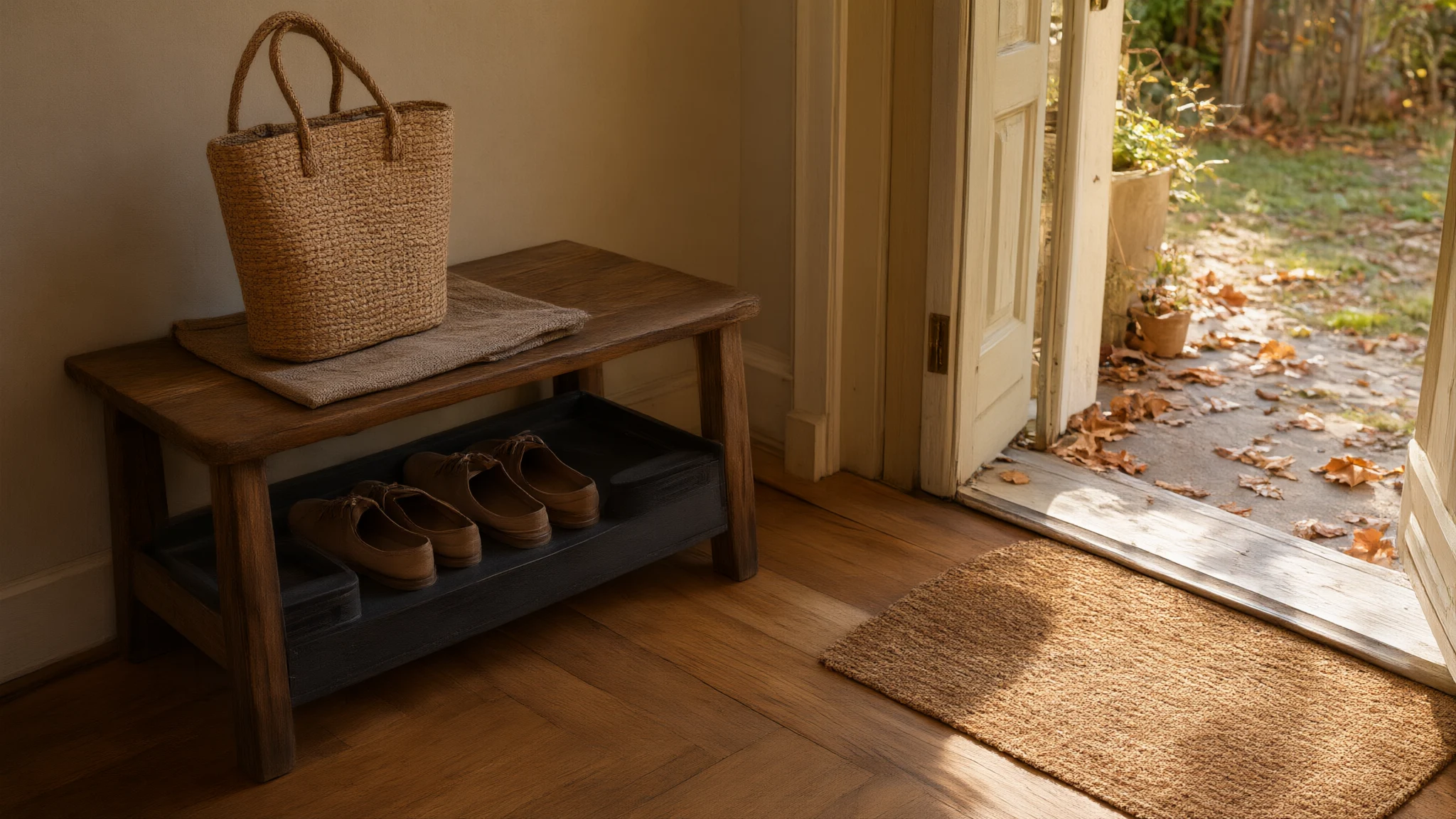
Shoes are only half the entryway story. A bag placed on the floor can move grit onto a chair or counter later. Give bags one reachable place and leave enough clear floor beneath it to clean. Use hooks or existing storage only where they can safely hold the load.
Take away the items that do not belong at the door at all. A parcel waiting to be opened, an empty tote, and last week’s papers can turn a short cleanup into a sorting job. One small basket for things heading elsewhere is enough; empty it rather than adding another basket.
Choose a routine that fits the traffic
After a busy day, check the mat and the visible trail first. On a quieter day, clean the edges, the tray, and the reachable trim. The routine does not need to cover the whole house every time someone walks through the door. It needs to catch dirt before it travels farther.
If dust and buildup have already spread along the hallway edges, read about deep cleaning in Fair Haven. Point out the places regular quick passes have missed and confirm which details can be included in the visit.
Book now with Luisa’s when you want help catching up. Keep the shoe landing spot and the clear walking path afterward. Those two small decisions give the next clean a better chance of lasting beyond the first person coming home.
AI-generated illustrations; not a customer home or cleaning result.